Thursday, July 31, 2008

Lessons Learned from Alpine Mountaineering

As I recently described in my Into the Wild blog entry, I spent a few days last week in New Hampshire with family. Every hike and climb I do is filled with lessons learned that make me a more responsive CIO.

Here are a few of my experiences.

On Monday, I expected to climb the Whitney Gilman ridge on Mt. Cannon in Franconia Notch. Unfortunately, we've had a very rainy July in New England, filled with pop-up thunderstorms. Monday had a 70% chance of Thunderstorms in the Franconia area, which is well known for its uniquely bad weather. Alpine mountaineering is often a race against bad weather, requiring pre-dawn starts and early afternoon descents off the mountain before afternoon thunderstorms put the climbers at risk. On most climbs there is always the possibility of retreat, which is part of the trip planning. Whitney Gilman has a lot of loose rock, no bolted anchors for rappeling, and is bordered by the 1000 foot 'black dike', a wet, mossy abyss. There is no retreat from this climb.

In my blog about risk, I described the Morts involved in each of my activities. Risk in my view is the likelihood of a bad event times the consequences of the bad event. Climbing a 1000 foot rock face without a possibility of descent with 70% thunderstorm risk in an area known for very bad weather, created a level of risk that I judged unacceptable. Summitting the mountain is optional, returning to the car is mandatory. I elected to skip all climbing and hike at low elevations on Monday.

The weighing of risks and benefits, evaluation of contingencies, and triage of all available options is something a CIO must do every day. Using my CIO behaviors in the intense world of alpine mountaineering makes me a better climber and visa versa.

On Tuesday, I climbed the Pinnacle Buttress (8 pitches, 5.8, picture above) to the summit of Mt. Washington. Although 5.8 climbing is only moderately difficult, the week of thunderstorms had created a thin sheet of moss over the entire climb, making handholds and footholds very tenuous. There were two options - become overwhelmed by the poor climbing conditions or just focus, trust myself and move to the top step by step. Often, when doing projects as a CIO, the politics, limited resources, software quality issues, and changes in scope can be very daunting. By focusing on the task at hand, realizing there is a process for everything, projects eventually succeed. Apply the same patience and perseverance I use in climbing to my work as an IT leader makes me a better CIO.

On Thursday, I hiked Mt. Monadnock from each compass direction, doing 4 ascents over the course of the day. On my final descent, I passed a gentleman who was moving slowly with his two young children, one 5 and one 8. The five year old was quite tired and having difficulty with the trail. The 8 year old asked her father which direction to go and he told her to follow me as I seemed to know where I was going. She took this as a command and ran down the mountain with me for 3 miles. It was 6pm, most hikers had left for the day and I was alone with an 8 year old girl I did not know, who was probably going to have to wait 2 hours for her family. I accepted responsibility for the situation, ensured she was fed and hydrated, then explained the situation to her. We walked to the Mt. Monadnock State Park headquarters where I filled out an incident report, asked the state park rangers to supervise her, gave them all my contact information, and asked them to followup. At 11pm, her father called me to say that the family was down the mountain, reunited and all was well.

By accepting responsibility for situations that are often not caused by me or are beyond my control (whether in the office or in the wild), I can ensure the satisfaction of all stakeholders.

A great vacation in New Hampshire. My next excursion into the wild begins on August 8 with the John Muir trail.

Wednesday, July 30, 2008

Automating the Disability Process with National Standards

At BIDMC and in Massachusetts, we use the structured, vocabulary controlled, XML-based Continuity of Care Document for data exchange between organizations. We've used it for direct clinical care to exchange discharge summaries between hospitals and clinicians. We've used it for Personal Health Record data exchange with Microsoft Health Vault. Our latest go live is the real time exchange of data with the Social Security Administration for disability adjudication.

Here's how it works:
1. A patient signs a consent to release records at an SSA office. That consent is digitized.
2. A SOAP/XML transaction is issued to BIDMC specifying patient demographics and including a base-64 encoded binary copy of the digitized consent.
3. BIDMC responds with a SOAP message containing the Continuity of Care Document of the patient's lifetime medical record.

Last week, we exchanged 1000 Continuity of Care Documents with the SSA after obtaining full patient consent. Here is a sample.

These documents include the following structured data

Problems (diagnoses) – coded
Lab Results (Chem-Heme-Urinalysis-Blood Gases) - coded
Procedures – coded
Encounters section which includes text documents:
Inpatient discharge documents
ED discharge summary
Operative notes
Letters – to patient, referral and referral reply
Progress Notes
Other notes and comments

using the HITSP C32 Continuity of Care Document format which has been recognized as the national standard by HHS for exchange of clinical summary data. These CCDs validate with the Schematron produced to ensure they conform to the standard.

CCD was created by informaticians from ASTM and HL7 working collaboratively to combine the structured tabular data from the ASTM Continuity of Care Record with the narrative document structures of the HL7 Clinical Document Architecture.

These groups are continuing to work together and in 2009 will produce CCD release 2.0 which will re-synchronize CCD with enhancements made to CCR, and address a number of other requirements for stakeholders in government, academia, industry, standards development organizations.

The Social Security Administration spends $500 million per year requesting paper records and disability adjudication can take 1 year. This new process, based on the Continuity of Care Document takes a few seconds, does not require human intervention and will lead to adjudication of many cases in near real time through the use of a business rules engine.

This kind of automation has a value proposition for everyone, reducing cost, saving time, and enhancing patient satisfaction. I look forward to many more such uses of the Continuity of Care Document as we build a Nationwide Health Information Network.

Tuesday, July 29, 2008

Removing the Emotion from IT

Every day as a CIO, I experience a range of emotions - great joy at watching my staff grow their skills, sadness when politics take time away from the fun work to be done, anxiety when the balance between IT supply and demand requires that I must say "not now" to a stakeholder request, and frustration when an unplanned project becomes a priority.

In my 25 years of leading people, one lesson I learn over and over is never to react with emotion to any of these events. How do I do it?

Although I am not a religious person, I use a variation of the idea from Ecclesiastes 3:1 (also set set to music in 1952 by Pete Seeger in his song 'Turn!, Turn!, Turn!') "To every thing there is a season, and a time to every purpose under the heaven".

The IT version is "To every thing there is a process which will resolve every problem under the heaven".

A conflict with a customer - try a kind email. If that does not work, meet face to face. If that does not work, ask your governance committees to consider the issue and develop a compromise that serves all stakeholders.

A conflict with an employee - try a kind email. If that does not work, meet face to face. If that does not work, involve HR.

A conflict with a colleague - try a kind email. If that does not work, go to lunch. If that does not work, escalate to senior management.

A conflict with senior management - try a kind email. If that does not work, meet face to face. If that does not work, ask the CEO. If that does not work, realize that eventually all senior managers move on and through kindness and the support of your stakeholders, you will outlast your naysayers.

Why is the life of a CIO filled with conflict and emotion? Demand for IT increases exponentially but IT budgets increase linearly (about 3-4% per year if you're lucky). Competition for resources creates conflict and conflict creates emotion.

Every day I receive hostile email, negative phone calls, and political challenges from various customers, employees, and colleagues. As I've said before, if I ever feel emotion, I "save as draft".

I always respond with a positive email, phone call or meeting suggesting a path forward.

If I were to ever respond emotionally, I would be burning bridges or giving my naysayers documentation to use against me. Healthcare is a small world. Healthcare IT is an even smaller world. The person who you alienate today may be your boss tomorrow. The person who you insult may be the decision maker on your next grant or promotion.

In a world of IM and Blackberry, we're all tempted to resolve complex issues with a few keystrokes. Generally that does not work. A supportive, positive email followed by a face to face meeting generally does work. Even if you feel the person emailing you is completely unreasonable, do not EVER react with emotion. It can only hurt you.

In addition to my credo that "to every thing there is a process", I also realize that time heals all conflict.

Can you even remember the problems that made you angry one year ago?

Are the people who caused the issue still around?

Does anyone remember the conflict and frustration?

Probably not. Will history record the masterful way you dealt with the conflict. Nope. If you reacted emotionally, will someone have a copy of that email filled with vitriol that you'd rather not see again. Absolutely.

It may take days or weeks to solve complex problems. An emotional email will only make the problem harder to solve.

Recognizing that solving complex problems will take several iterations, you need to accept the multi-step process needed to ensure you get a good outcome.

My previous blogs on related topics are helpful to removing the emotion from IT. See:

Management Lessons Learned as a Parent

Resolving Conflict
How to be a bad CIO
How to be a great boss
IT Governance

Monday, July 28, 2008

Unified Communications

I'm back from my first "into the wild" vacation and returning to the blog.

I was recently asked about the plan for implementing "Unified Communications" at BIDMC and HMS.

First, let's define Unified communications

1. Per Wikipedia

"An evolving communications technology architecture which automates and unifies all forms of human and device communications in context, and with a common experience. Its purpose is to optimize business processes and enhance human communications by reducing latency, managing flows, and eliminating device and media dependencies."

2. Per Microsoft

"Bridging the gap between telephony and computing to deliver real-time messaging, voice, presence, e-mail, and conferencing."

3. Per Gartner's Unified Communications roadmap

• Voice and Telecommunications: Includes fixed voice, mobile voice and softphones. Can include within building as well as remote access.

• Conferencing: Includes audio, video, and Web conferencing. Can also include meeting room technologies, multipoint Webcam approaches, and unified or integrated conferencing solutions.

• Messaging: Includes e-mail, voice mail and unified messaging.

• Instant Messaging (IM)/Presence: Includes IM, presence and rich presence
aggregation (the ability to aggregate and publish presence and location information from multiple sources).

• Clients: Includes thick clients, thin Web clients and mobile clients. This may also include limited software dashboard clients for embedding within IT applications.

• Applications: Includes applications that have integrated communication functions. Four key application areas are consolidated administration tools, collaboration applications, notification applications and contact center applications. Over time, however, many other applications will be communication-enabled.

What are we doing at BIDMC and HMS?

1. Enterprise Wifi is deployed over 2 million square feet, ensuring that Wifi enabled Blackberries, iPhones, and subnotebooks can connect anywhere at anytime.
2. Blackberry and iPhone 3G are supported for the enterprise via our Blackberry Enterprise Server (BES) and Active Sync.
3. Exchange 2007 is supported for the enterprise
4. IM via Meebo.com is supported for the enterprise via our new intranet portal which launches later this year.
5. Blogs are supported and encouraged
6. Wikis are supported and encouraged
7. Our Enterprise portals deliver RSS feeds, News, Blogs, and Wikis
8. Our Enterprise quality improvement efforts are managed via Forums and Wikis
9. We support Telemedicine and Teleconferencing extensively using both IP and ISDN teleconferencing.
10. We use Webex and other virtual meeting tools extensively. I have personally championed the idea of virtual meetings, flexible work arrangements, and remote access technologies which enable employees to work anywhere, anytime.

We have looked at Microsoft's Unified Communications platform and Office Communications Server 2007. These products integrate the experiences you associate with the telephone such as phone calls, voice mail, and conferencing with IM, email, and calendars. There has not been significant demand from my stakeholders to have voice mail or faxes delivered to email boxes. Most folks seem to consider their desktop applications to be separate from their phone, using their computer for social networking/virtual meetings/email/IM most of the time and their phone for voice calls on occasion, having little demand to integrate the two. Since the iPhone blurs the line between computer and phone, it will be interesting to watch how demand for different types of unified communication evolve.

Friday, July 18, 2008

Cool Technology of the week

We live in a connected world. With email, IM, Facebook, Twitter, MySpace, Blogger, etc., many folks are tied to wired or WiFi connection most of the day. The recent Verizon commercials highlight their USB EVDO cards so that you can get out of Internet Cafe jail and take your mobile devices on the road. However, this approach requires a data plan for every USB device you own and requires special software to be installed on your laptop.

The cool technology of the week is mobile WiFi for your car that takes the complexity out of mobile connectivity. AutoNet Mobile is a WiFi access point with built in 3G (EVDO) connectivity that enables any existing WiFi compliant device (desktops, laptops, Macs, PDAs, servers, iPhones) to connect to the web while in your car for $29.00 per month.

Access speeds range from 600Kbps-800Kbps with upload speeds about 200Kbps. The Wi-Fi connection is secured with WEP encryption, MAC address restriction or WAN port restriction. It also supports VPN pass-through. No software is needed to use the device, since it uses existing WiFi connections resident on mobile devices and thus it is compatible with all operating systems and devices. No additional attennas are needed.

Chrysler plans to offer this service on all of its 2009 models starting in August.

Of course, this connectivity is to be used by passengers sharing your commute, family members who want to stay connected on long car trips or as an access point once you've reached your destination. WiFi connectivity while driving is a bad idea - keep your attention on the road.

Always on mobile broadband for your car which works with existing WiFi devices - that's cool!

Thursday, July 17, 2008

Into the Wild

In Jon Krakauer's novel Into the Wild, Christopher McCandless shrugs off the trappings of conventional society and seeks adventure on the road like a modern day Jack Kerouac. He ends his Journey in Alaska where he spends 100 days alone in the wilderness and dies by consuming poisonous plants (or the poisonous mold growing on the them).

I'm a bit more conventional than Chris McCandless but the notion of going into the wild to recharge your body and invigorate the mind is a good one.

Here's my schedule for going Into the Wild this summer, which will explain a few gaps in my blogging days:

July 21 - Ascent of Whitney Gilman Ridge (5.7) on Cannon, Franconia Notch, New Hampshire. Every year in July, I ascend Whitney Gilman, the classic alpine climb in New England. The climb rises 2000 feet above highway 93 near where the Old Man of the Mountain recently fell off Cannon mountain. The challenge of climbing on Cannon is that the rock is exfoliating granite, which, like the Old Man, tends to fall off over time. The route is known for the "pipe pitch", where a lack of places to place protection led the first ascent party to hammer a pipe in a crack to support their ropes. On the pipe pitch you stand on a 6 inch square of rock looking down 1000 feet into the Black Dike, then you make a few gymnastic and strenuous moves to pull your body over a ridge by your fingertips. Needless to say, I will not not be bringing my Blackberry.

July 22 - Ascent of Pinnacle Buttress (5.7) in Huntington Ravine to the top of Mount Washington. Pinnacle is another classic climb in New England, known for its particularly challenging and strenuous Allis Chimney, two vertical walls of rock with few hand and foot holds.

July 23-25 For the past ten years, my family has stayed at a local farm, East Hill in Troy, New Hampshire during the last full week of July. East Hill is at the base of Mt. Monadnock (elevation 3165 feet), the most climbed mountain in the United States. Each day that we're at East Hill, I ascend the mountain 4 times, once from each compass direction via the Dublin or Pumpelly trail (North), White Cross or White Dot (South), Birchtoft trail (East), and White Arrow (West) trails. I play my traditional flutes while on the trail, creating an echo of haunting music that traverses the canyons and forests of the mountain. This year I'll play the Japanese flute, the Anasazi flute, and the Woodlands Native American flute.

August 8-11 My own version of the Chris McCandless adventure, I'm walking 100 miles on the John Muir Trail over 4 days. 25 miles per day is an aggressive schedule which requires that I travel fast and light. My gear list ensures my pack about 15 pounds during the entire trip. Since all my food will be vegan, I do carry a bit of extra weight given the reduced calorie density of lentils, rice, and dried beans. During these 4 days, I will not have access to a cellular signal.

August 12 Ascent of Mt. Tenaya (5.6 variations) in Tuolumne Meadows. Tenaya is an extraordinary climb with 18 pitches of high quality granite overlooking Tenaya Lake in Yosemite. Last year, a trick of the light made the summit (picture above) look like heaven was shining on me (no photoshop used).

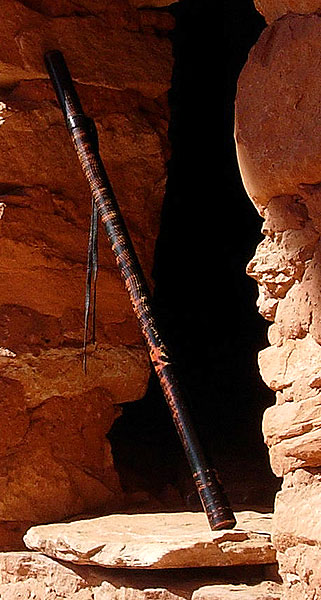
August 13 Ascent of Cathedral Peak (5.8 variations) and Eichorn Pinnacle (5.9) in Tuolumne Meadows. Per my New Year's resolution, I'll be playing a Japanese flute concert from the summit. Barry Higgins, a master flutemaker , has agreed to build me a special Shakuhachi for climbing made of "Urban Elderwood" otherwise known as PVC pipe. He made my Anasazi flute and I'm confident his PVC Shakuhachi will be extraordinary.

August 14 Hike up the Tioga Crest. At 13000 feet, the Tioga Crest overlooks Saddlebag Lake, Tioga Pass, Mt. Dana, Ada Lake, Mt. Warren, Mt. Gibbs, and Mt. Scowden. I'll follow old mining switchbacks to ascend the crest near the TipTop and Summit Mines. The Summit is still filled with the beds, clothes, and work table from 19th century miners. It's so hard to reach that no one has touched their belongings.

August 15 Ascent of North Ridge of Conness (5.6). Mt. Conness has a two classic climbs - the West face (which I did last year) and the North Ridge. It's a long day of climbing (15 hours car to car), with a highly exposed knife edge ridge leading to the summit.

For all my friends in the Blogosphere, my staff, the folks at the Poison Control Center who work with me on mushroom ingestions, and my customers, these are the days this year I'll be slow to the respond.

And now I go into the wild.

Wednesday, July 16, 2008

Open Source Medical Records

Last week, I had lunch with the CEO of MedSphere, Mike Doyle, to learn about the company's plans for OpenVista. The idea is simple - take the the publicly available code from the Veterans Administration clinical information system, add new modules such as revenue cycle interfaces that are needed in practices outside the VA system and include support/implementation services. In effect, you'll have the "Red Hat Linux" of the electronic health record world.

Medsphere has chosen to package Vista in two forms - Enterprise for large hospitals/integrated delivery systems needing departmental system and Clinic for small offices/multi-specialty clinics needing strong outpatient functionality.

Enterprise
includes

* Patient Information Management System
* Health Information Management System
* Clinical Information System
* Laboratory
* Pharmacy
* Radiology
* Nutrition and Food Service
* Interface Suite

Clinic includes

* Patient Information Management System
* Health Information Management System
* Clinical Information System
* Laboratory
* Pharmacy
* Radiology

Medsphere has several live deployments in the US and internationally.

The VA's Vista system is well known for its integration, functionality and sophisticated decision support. I spoke with several for profit vendors about their opinion of an Open Source EHR based on Vista. They had a very reasonable response - the real cost of providing a comprehensive clinical IT solution is not really the code (since most vendor products development costs have already been recouped). The cost is in the service.

Implementation, practice transformation, workflow support, and interfaces are the really resource intensive aspects of implementing EHRs and hospital information systems.

Medsphere's true measure of success will be its ability to deliver high touch support in a scalable way as its market expands. Mike shared the Medsphere core values, vision, value proposition with me (the picture above). You'll see that their ideology is very noble - reduce costs, improve quality, and make a difference in healthcare. Decoding the slide, BHAG means Big Hairy Audacious Goals from the Jim Collins article Building Your Company's Vision. The Hedgehog Concept refers to the understanding of the one thing you can be best at. Jim Collins discusses it in Good to Great based on Isaiah Berlin's essay “The Hedgehog and the Fox".

In addition to Jim Collins work, Mike Doyle has great respect for the books "The Blue Ocean Strategy" and "The Culture Code" .

I believe Medsphere is a valuable stakeholder in the eHealth marketplace. As a strong advocate for open source, I wish them the best in their quest to redefine healthcare.